English| EUR
Suggested for you
More currencies
Choose a language
South Australia keeps no dolphins in captivity, so every in-water encounter offered from Glenelg happens in open sea. This swim.with wild dolphins adelaide guide sets out what that difference means in practice — how crews locate a pod, how swimmers enter the water, and why no outcome is promised.
Quick answer
Yes — swimming with wild dolphins in Adelaide is possible from Marina Pier at Glenelg, on a tour priced at 154 AUD that includes swim equipment and a marine biologist guide. The dolphins are free-ranging bottlenose in Gulf St Vincent, so sightings are frequent but never guaranteed. Morning departures between 08:00 and 12:00 bring the calmest water and the most reliable activity.
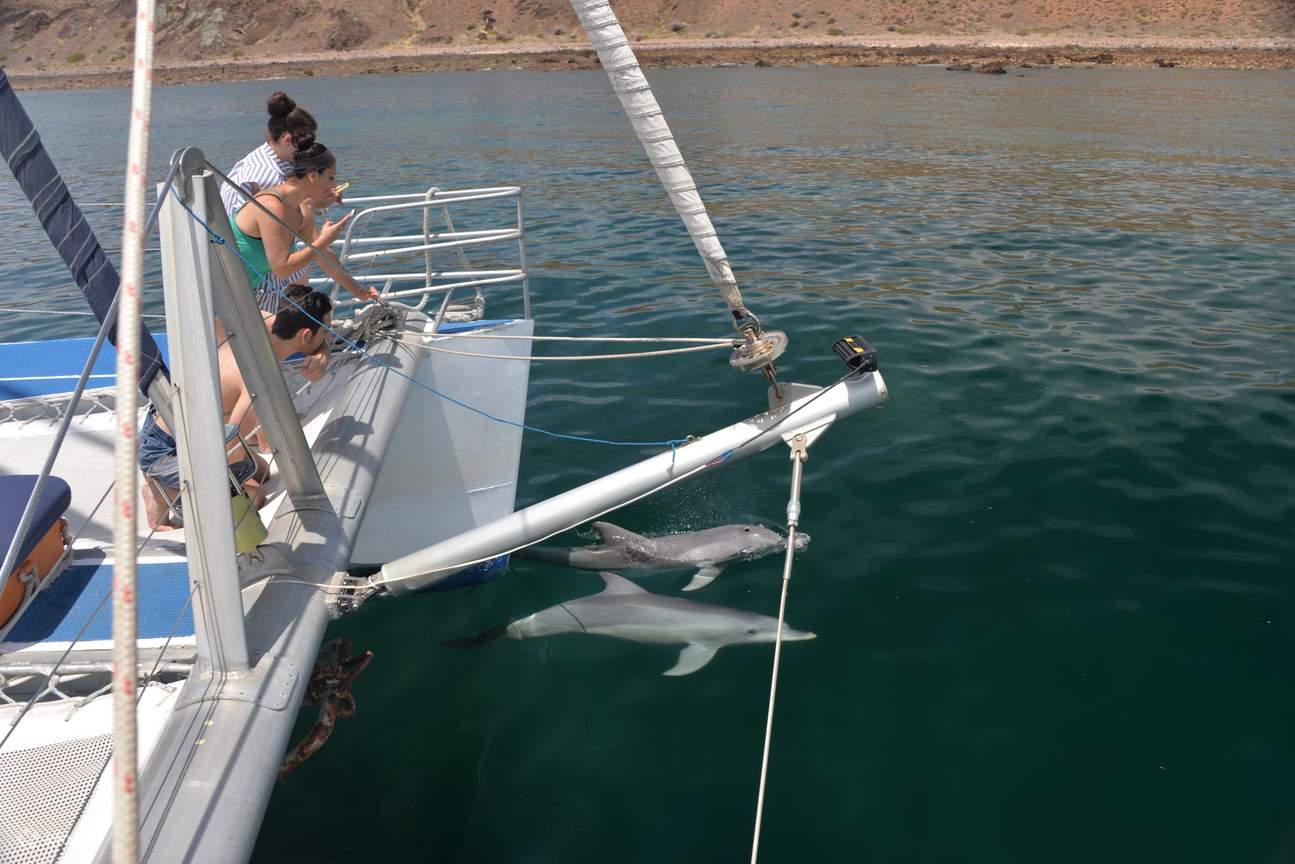
Adelaide is one of very few capital cities anywhere with a resident population of bottlenose dolphins living inside its urban waterways. The Port River and Barker Inlet estuary, a short drive north of Glenelg, was declared the Adelaide Dolphin Sanctuary under South Australian law in 2005, and the animals that patrol Gulf St Vincent move freely between those channels and the open coast. That legal and ecological status shapes everything about a swim.with wild dolphins adelaide outing: the dolphins are not held, fed, trained or cued, and no facility in the state keeps them behind glass or netting. The practical consequence is that the encounter is unscripted. Boats leave Marina Pier at Holdfast Shores Marina and search the gulf for a pod travelling on its own business. Swimmers are towed behind the catamaran on mesh boom nets rather than chasing the animals, a method designed to keep human movement slow, predictable and non-threatening. A marine biologist reads the behaviour of each pod before anyone enters the water. Some groups are resting, calving or hunting, and those are left undisturbed. Sightings are common across the season, but sustained in-water contact is never promised, and no responsible Glenelg wild dolphin swim tour will pretend otherwise. That distinction is the whole point. Nothing performs. There is no feeding platform, no trained behaviour, no hourly show and no schedule the animals answer to. What a visitor trades in certainty is returned as authenticity: dolphins approaching a hull because they choose to, bow-riding for several minutes, or drifting past and losing interest entirely. Crews note that voluntary approaches tend to produce the longest and calmest interactions, precisely because the animals set the terms. Juveniles are often the most curious; mothers with calves keep their distance. Anyone weighing an Adelaide dolphin watching cruise should therefore treat wind, swell and water clarity as the variables that matter most, rather than expecting a fixed itinerary. Departures are weather-dependent, and a cancelled morning usually means a flat, grey gulf rather than an unwilling crew. As of August 2026, the sensible approach is to confirm the running season and the day's conditions directly with the operator on +61 412 811 838 or at temptationsailing.com.au before locking in travel. Read the swim.with wild dolphins adelaide sections that follow for hours, costs, transport from the city and what to pack — this page frames the choice; those sections supply the numbers.
“The dolphins are not held, fed or trained — they arrive, or they do not.”
Visitors to Adelaide must decide between observing dolphins in their native ecosystem or participating in human-managed facilities. This comparison highlights the differences in behavioral engagement and environmental impact.
| Wild Encounters Open Ocean Recommended | Captive Encounters Managed Facility | |
|---|---|---|
| Encounters | Spontaneous and unpredictable | Structured and repetitive |
| Human Interaction | Passive observation | Direct touch and trained commands |
| Natural Environment | Unrestricted marine habitat | Enclosed pools or lagoons |
| Conservation Focus | Habitat protection and research | Public education and animal husbandry |
Verdict: Choose wild encounters for authentic animal behavior in an unrestrained environment, or captive facilities if your priority is guaranteed close-contact interaction.
The tour operator maintains consistent daily operations throughout the week to provide access to wild dolphin encounters.
The departure point for wild dolphin encounters is located at Marina Pier, Holdfast Shores Marina, Glenelg, SA 5045, Australia. Visitors typically arrive via public transport or private vehicle to the Glenelg foreshore area.
Glenelg Tram from Adelaide City Centre to Moseley Square
M2 or Anzac Hwy to Glenelg
Route 265 to Stop 22
Plan to arrive within the 08:00–12:00 window to ensure optimal conditions for your departure. Parking is available within the Holdfast Shores precinct, though it is recommended to allow extra time for locating a spot during peak periods.
A wild swim runs on the ocean's terms, so the preparation that matters most happens well before you reach Marina Pier.
Everything you need to know about swim.with wild dolphins adelaide
The Glenelg tour provides a rare opportunity to observe marine mammals in their natural habitat rather than in artificial enclosures. Participants engage in a respectful observation of these intelligent creatures within the waters of the Gulf St Vincent. Seeing them in the open ocean is a significantly different experience than visiting an aquarium or captive facility. You will be accompanied by a marine biologist guide who ensures the safety of both swimmers and the wildlife.